
Rowing Machine Workout for Beginners: 4-Week Plan (2026)

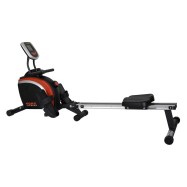
A good rowing machine workout for beginners teaches you the stroke first and builds your fitness second. Rowing uses your legs, core, back and arms in one smooth movement, so the first few sessions are about learning the rhythm, not about going hard.
This four-week plan gives you three short sessions a week, with the exact intervals, stroke rate and resistance to use. You will also find a step-by-step guide to technique, the most common mistakes, and a look at five beginner-friendly rowers from our Brisbane range. You do not need any experience, and you do not need to buy anything to start if you hire a machine first.
For a rowing machine workout for beginners, row three times a week with a rest day between sessions. Warm up for five minutes, row the main set, then cool down for five minutes. Set the resistance (damper) to 3 to 5 if you have an air rower, row at 18 to 22 strokes per minute while you learn, and build towards 24 to 30. Week one is 6 rounds of 2 minutes, and by week four you row 20 minutes at a steady pace.
- Before Your Rowing Machine Workout for Beginners: Setup
- Rowing Technique: The 4 Phases of the Stroke
- Rowing Machine Workout for Beginners: The 4-Week Plan
- Week-by-Week Guide
- Warm-Up and Cool-Down
- Common Mistakes to Avoid
- Which Rower for Beginners?
- What to Do After Four Weeks
- Rowing Machine Workout for Beginners FAQ
Before Your Rowing Machine Workout for Beginners: Setup
Spend two minutes on setup before every rowing machine workout for beginners, and it will pay off in comfort and safety.
- Adjust the footrests. Strap your feet in with the strap across the widest part of your foot, snug but not tight.
- Check the handle and seat. You should be able to slide freely and reach the handle without straining.
- Set the resistance. On an air rower, the damper is the lever on the flywheel housing, numbered from 1 to 10. Many beginners assume that 10 gives the best workout, but Concept2, the maker of one of the best-known indoor rowers, says a damper setting of 3 to 5 is likely to give you the best workout. A high setting feels like dragging a heavy boat and tires you out before your technique has time to develop. Read more in Concept2’s guide to damper setting, stroke rate and intensity.
- Magnetic and water rowers. Magnetic rowers have numbered resistance levels, so start in the lower-middle range. Water rowers add resistance as you pull harder, so there is no setting to adjust.
- Warm up. Row easily for five minutes before the main set.
If you have an existing back or knee problem, or you have not exercised for a long time, check with your doctor or a physiotherapist before you begin. If you are still choosing between rower types, our guide to water, magnetic and air rowers explains the differences.
Rowing Technique: The 4 Phases of the Stroke
Every stroke has the same four phases. Learn them slowly before you add speed to your rowing machine workout for beginners.
1. The Catch
This is the starting position. Your knees are bent, your shins are roughly vertical, your arms are straight and your body leans slightly forward from the hips. Your shoulders are relaxed and your back is flat.
2. The Drive
Push with your legs first. As your legs straighten, swing your body back, and only then pull the handle to your lower ribs. The power should come from your legs, with the body and arms following in that order.
3. The Finish
At the end of the drive your legs are straight, your body leans back slightly and the handle sits at your lower ribs. Your elbows are close to your body and your shoulders stay down.
4. The Recovery
Reverse the order: straighten your arms, lean your body forward from the hips, then bend your knees and slide forward to the catch. Take the recovery more slowly than the drive. Concept2 suggests a rhythm of one beat for the drive and two beats for the recovery, which keeps you from rushing back to the catch.
Rowing Machine Workout for Beginners: The 4-Week Plan
Do three sessions each week of this rowing machine workout for beginners, for example Monday, Wednesday and Friday. Every session has a five-minute easy warm-up, the main set below and a five-minute easy cool-down. Stroke rate means strokes per minute, which your rower’s console shows as spm.
| Week | Main set (each session) | Stroke rate | Rowing time | Focus |
|---|---|---|---|---|
| 1 | 6 rounds of 2 minutes rowing and 1 minute rest | 18–20 spm | 12 minutes | Learn the four phases |
| 2 | 5 rounds of 3 minutes rowing and 1 minute rest | 20–22 spm | 15 minutes | Smooth, steady rhythm |
| 3 | 3 rounds of 6 minutes rowing and 2 minutes rest | 22–24 spm | 18 minutes | Longer efforts |
| 4 | 2 rounds of 10 minutes rowing and 3 minutes rest (final session: 20 minutes non-stop) | 22–24 spm | 20 minutes | Steady endurance |
Concept2 suggests a stroke rate of 24 to 30 spm for most workouts, so the plan builds towards that range. While you are learning, a lower rate lets you focus on getting each phase right.
Week-by-Week Guide
Follow each week of this rowing machine workout for beginners in order, and repeat a week if the movement still feels awkward.
Week 1: Learn the Four Phases
The goal is to feel the sequence of legs, body and arms. Row at an easy pace and think about each phase. The rest minutes are there for you to check your posture and reset.
Week 2: Build a Smooth Rhythm
Three-minute rows are long enough for a rhythm to form. Count your strokes in your head, or watch the spm on the console, and keep the rate steady rather than speeding up as you tire.
Week 3: Longer Efforts
Six minutes at a time asks for patience. Keep your recovery slow, your back flat and your grip loose. If your form starts to slip, take a break rather than pushing on.
Week 4: Steady Endurance
Two ten-minute rows, then a 20-minute non-stop row in the last session, show how far you have come. Aim for the same pace at the end as at the start.
Warm-Up and Cool-Down for a Rowing Machine Workout for Beginners
A proper warm-up and cool-down make every session more comfortable and help you keep rowing week after week.
Warm-up (5 minutes). Row easily at 16 to 18 strokes per minute, focusing on smooth, relaxed strokes. Add a few arm circles and gentle hip hinges before you start if your body feels stiff.
Cool-down (5 minutes). Row slowly at a low stroke rate until your breathing returns to normal, then step off the machine.
Gentle stretches. After each session, take a minute or two to stretch the muscles you used. Good choices are the hamstrings, quadriceps, hip flexors, lower back and shoulders. Hold each stretch gently and stop if anything hurts. Rowing works the whole body, so even a short stretch routine helps you feel fresh for your next session.
Common Mistakes to Avoid
These are the most common mistakes in a rowing machine workout for beginners, and each one is easy to fix.
- Pulling with your arms first. Always start the drive with your legs.
- Rounding your back. Keep your chest open and your spine long, especially at the catch.
- Shooting the slide. Do not push your legs down before your body has followed, because it wastes power and strains your back.
- Rushing the recovery. A slow return keeps you balanced and ready for the next drive.
- Gripping the handle too tightly. Use a relaxed hook grip, and let your hands do the least work.
- Setting the damper to 10. More resistance is not better for most people, as Concept2 explains.
Which Rower for Beginners?
The best rower for a rowing machine workout for beginners is a comfortable one you will use regularly. Here are five from our range, with prices and details listed on each product page. We also stock Concept2 rowers; call us for current pricing.
| Rower | Price | Resistance | Max user weight |
|---|---|---|---|
| BodyWorx KRX290M | $559 | Magnetic, 8 levels | 110 kg |
| Lifespan ROWER-500D | $599 | Air and magnetic, 32 levels | 150 kg |
| York Performance Rower | $769 | Manual, 8 levels | 110 kg |
| Lifespan ROWER-760 | $929 | Water | 200 kg |
| Bodyworx KRX6080 Air Rower | $1,099 | Air | 150 kg |
BodyWorx KRX290M: Quiet and Compact
The KRX290M uses magnetic resistance with eight adjustable levels, which makes it whisper-quiet. It folds down with a single pin and the LCD console tracks time, distance, strokes and estimated calories, so it suits a first rowing machine in a small home.

Lifespan ROWER-500D: Air and Magnetic
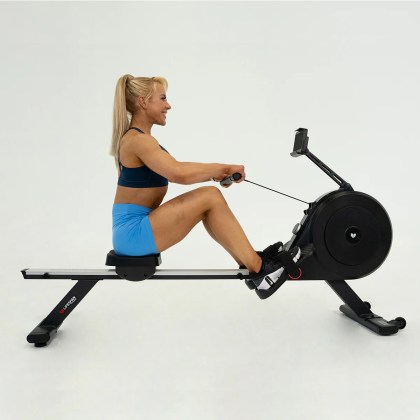
The ROWER-500D combines a hybrid air and magnetic flywheel with 32 levels of resistance. It has large 30 cm pedals with velcro straps, a belt drive and a 150 kg user weight capacity, and it also folds for storage.
Lifespan ROWER-760: Water Resistance
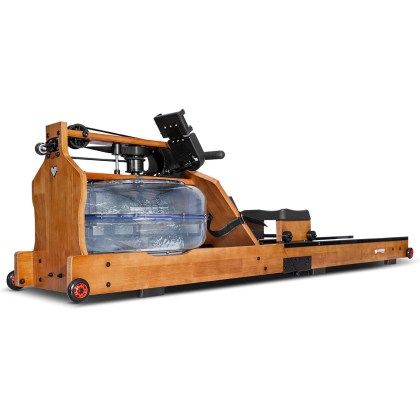
If you like the natural feel of rowing on water, the ROWER-760 is a belt-driven water rower with a timber frame, a 17 litre maximum fill line and a 200 kg user weight capacity. It folds upright to save space.
Bodyworx KRX6080 Air Rower: Honest Resistance
On an air rower the harder you pull, the harder it gets, with no preset levels to limit you. The KRX6080 has Bluetooth connectivity to Kinomap and other training apps, a built-in heart rate receiver and a 150 kg user weight capacity.

Short on space? Our guide to the best rowing machine for small spaces can help, and our Concept2 Model E review covers one of the most popular rowers in the world.
Try Before You Buy: Rowing Machine Hire
Not sure you will stick with rowing? Rowing machine hire in Brisbane starts from $20 per week, so you can complete a rowing machine workout for beginners at home before you decide.
What to Do After Four Weeks
Once you can finish your rowing machine workout for beginners and row 20 minutes comfortably, you have several options. You can extend your steady rows, add short intervals, or start building strength with our guide to rowing machine workouts for muscle building.
You can also compare rowing with other machines. See how rowing stacks up against the treadmill in our guide to treadmill vs rowing machine, or against an air bike in air bike vs rowing machine.
Rowing Machine Workout for Beginners FAQ
How often should a beginner use a rowing machine?
Three times a week, with a rest day between sessions. This gives your body time to adapt while you learn the stroke.
How long should a beginner rowing workout be?
A rowing machine workout for beginners should start with about 25 to 30 minutes in total, including a five-minute warm-up and a five-minute cool-down. The actual rowing time starts at 12 minutes in week one and reaches 20 minutes by week four.
What damper setting should a beginner use?
On an air rower, Concept2 says a damper setting of 3 to 5 is likely to give you the best workout. A setting of 10 is not better for most people.
What stroke rate should I row at?
Start at 18 to 22 strokes per minute while you learn the movement, and build towards the 24 to 30 that Concept2 suggests for most workouts.
Is rowing good for weight loss?
Rowing is a full-body cardio exercise that burns calories, and results depend on your overall routine and diet. See our comparisons of treadmill vs rowing machine and air bike vs rowing machine for the numbers.
Is rowing hard on your back?
Done with good technique it should not be. Keep your back flat, start each drive with your legs and avoid rounding your spine. If you feel pain, stop, and speak to a doctor or physiotherapist.
What is the best rowing machine for beginners?
A comfortable one you will use regularly. Magnetic rowers are quiet and easy to adjust, air rowers respond to how hard you pull, and water rowers give a natural feel. Our five picks above range from $559 to $1,099.
Can I hire a rowing machine in Brisbane?
Yes. Mr Treadmill hires rowing machines from $20 per week. Call (07) 3865 4940 or visit us at 126 Robinson Rd East, Geebung QLD 4034.


