Treadmill for Injury Recovery: How Lauren Got Back to Competitive Running


Recovering from a knee injury or surgery and wondering how to safely rebuild your running fitness? A treadmill for injury recovery gives you the pace control, cushioning, and consistency you need to return to distance running with confidence. For competitive distance runner Lauren Hume, a home treadmill from Mr Treadmill became far more than a fitness tool — it became an essential part of her rehabilitation after knee surgery, helping her rebuild strength, rhythm, and confidence one session at a time.
If you are working through an injury and wondering whether a treadmill could support your recovery, Lauren’s experience — and the practical guidance below — will help you decide.
Mr Treadmill stocks a full range of treadmills suited to injury recovery in Brisbane. Browse the range here or call (07) 3865 4940 to speak with our team about the right machine for your rehabilitation goals.
Lauren’s Story: A Treadmill for Injury Recovery After Knee Surgery
Lauren Hume is a competitive distance runner who knows exactly how demanding — and how vulnerable — the body can be under sustained running load. When knee surgery sidelined her, she faced a challenge that goes well beyond the physical:
“Recovering from knee surgery has honestly been one of the hardest challenges both physically and mentally that I have and continue to work through. From the outside it might look like a physical challenge, however the mental capacity to accept that I have had to start from the beginning, allowing my body time to build strength and rhythm again just to get the confidence that my knee can take the load again.”
Prior to surgery, Lauren was already mindful of running load and surface impact — concerns familiar to any serious distance runner. She reached out to Mr Treadmill to bring training home:
“From the beginning and this initial interaction the team has been second to none — from communications, delivery and following up on product questions and support. The treadmill itself has been an absolute gem. Ask anyone and they’d roll their eyes at how much I use and rely on the treadmill. No regrets though as it has helped my running in the form of pace control, reducing load and managing fatigue.”
Now working her way back to full fitness and competitive racing, Lauren’s verdict is clear:
“Now as I continue to work my way back to full fitness and return to racing, the treadmill is without a doubt an essential tool again — not just in fitness but confidence. If this rings a bell in your training or situation — I would most definitely recommend the team at Mr Treadmill.”
Why a Treadmill for Injury Recovery Works Better Than Road Running
Road and footpath surfaces are uneven, cambered, and hard — conditions that add reactive stress to an already compromised joint. A treadmill removes those variables, giving you a controlled environment where every session can be precisely calibrated to your current recovery stage.
Three key reasons a treadmill for injury recovery outperforms road running in early and mid-stage rehabilitation:
- Cushioned deck — Modern treadmill decks reduce impact compared to concrete or asphalt. For post-surgical knees or stress injuries, this difference matters every step
- Precise pace control — Setting an exact speed removes the temptation to push too hard. During injury recovery, even 0.5 km/h too fast on a given day can set you back
- Instant stop — If pain or discomfort appears mid-session, you stop the belt and step off. On a road run, you still have to get home
- No excuses — As Lauren put it, there are no excuses when it comes to weather. Consistent low-intensity sessions are the backbone of injury recovery, and a home treadmill removes every barrier to showing up
Treadmill vs Road Running for Injury Recovery
| Factor | Treadmill | Road / Footpath Running |
|---|---|---|
| Joint impact | Lower — cushioned deck absorbs impact | Higher — concrete and asphalt are unforgiving |
| Pace control | Exact — set speed to the decimal | Variable — easy to unconsciously push too hard |
| Surface consistency | Flat, predictable, stable | Camber, curbs, uneven terrain add reactive stress |
| Weather dependency | None | High — rain, heat, and cold affect training quality |
| Monitoring | Built-in speed, incline, HR, distance | GPS watch only — no surface control |
| Risk of re-injury | Lower — controlled environment | Higher — reactive terrain and pace variability |
| Mental pressure | Lower — can stop immediately, no distance from home | Higher — commitment to the full distance |
| Training continuity | Year-round regardless of conditions | Weather and daylight dependent |
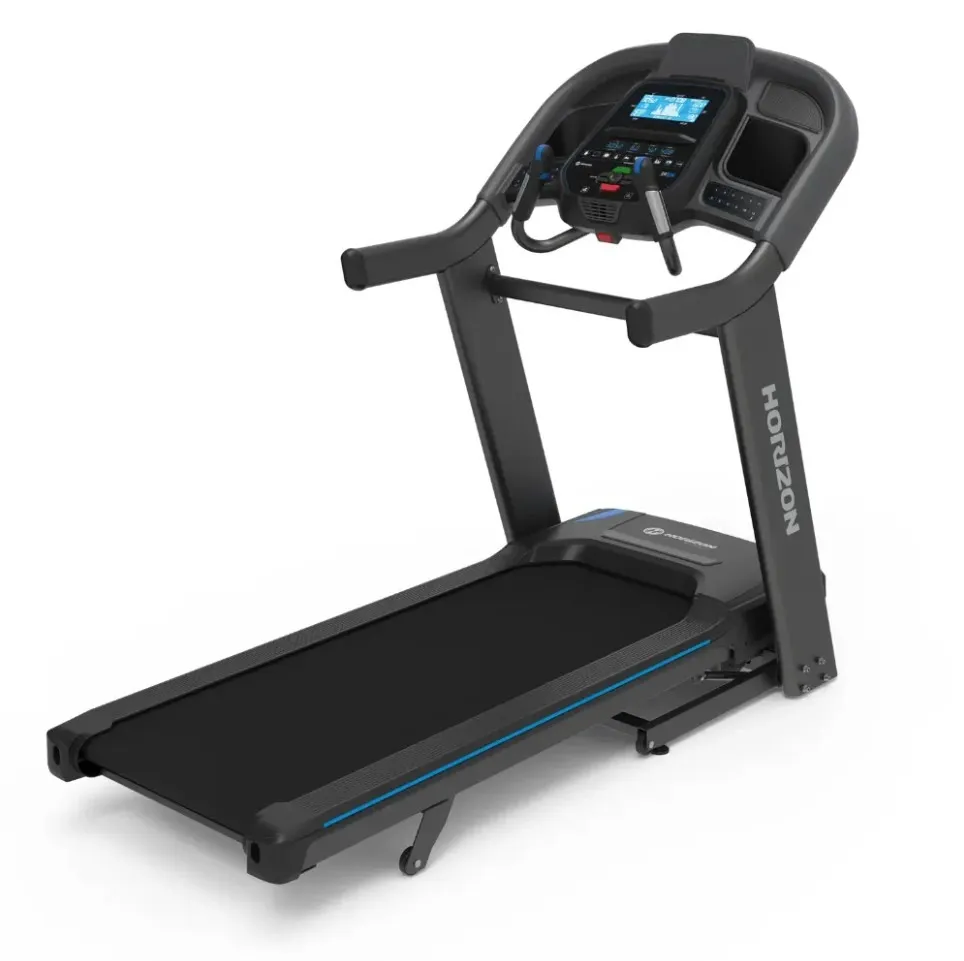
For most runners, a return-to-running protocol during injury recovery begins on a treadmill and progressively reintroduces outdoor running as load tolerance increases. The two are not mutually exclusive — they are complements in a smart recovery plan.
Using a Treadmill for Injury Recovery: A Progressive Framework
Every injury and surgical recovery follows a different timeline — always work within the plan set by your physiotherapist or surgeon. The general framework below is a guide for how treadmill training typically progresses during lower limb injury recovery:
Phase 1 — Walking (weeks 1–4 post-clearance): Begin with flat walking at a comfortable pace, typically 4–6 km/h. Focus on gait quality, not distance. Sessions of 15–20 minutes, daily if comfortable. The treadmill’s cushioning and speed control make this phase easier and more consistent than walking outside.
Phase 2 — Walk/jog intervals (weeks 4–8): Introduce short jogging intervals — 1 minute jog, 2 minutes walk — and progress the jog duration gradually. Treadmill speed control lets you set the exact pace your physio prescribes rather than estimating by feel.
Phase 3 — Progressive running (weeks 8–16): Extend continuous running duration while managing weekly load increases. Most return-to-running protocols recommend no more than a 10% increase in weekly running volume. Treadmill incline can be added progressively to build strength before returning to hilly outdoor courses.
Phase 4 — Return to distance running: As confidence and capacity build, outdoor running reintegrates alongside treadmill sessions. Many runners — like Lauren — continue using their treadmill permanently for load management, bad weather days, and recovery runs.
Key Features to Look for in a Treadmill for Injury Recovery
Not all treadmills are equal when it comes to rehabilitation use. These are the features that matter most:
- Deck cushioning — Look for multi-zone cushioning systems that absorb impact without being so soft they alter your gait mechanics
- Speed range — For early recovery, a low minimum speed (0.8–1 km/h) allows true walking pace. A top speed of 16 km/h or above is sufficient for most distance runners
- Motorised incline — Adjustable incline lets you load progressively without adding speed. Incline walking is often prescribed early in knee recovery to strengthen the quad without knee flexion load
- Running surface size — A belt of at least 50 cm wide and 145 cm long gives most runners enough room to maintain natural stride without feeling constrained
- Heart rate monitoring — Built-in sensors or Bluetooth chest strap compatibility helps you stay within the heart rate zones your recovery protocol targets
- Stability and frame — A solid, heavy frame reduces lateral movement during running — important when your joint is still building stability
Browse our full treadmill range in Brisbane or call (07) 3865 4940 — our team can advise on the best model for your recovery stage and goals.
The Mental Side of Treadmill Training During Injury Recovery
Lauren’s testimonial is striking for how openly she describes the mental dimension of injury recovery — something many runners underestimate until they are in it. The fear of re-injury, the frustration of starting from zero, and the loss of the fitness identity that distance running builds over years are all real challenges that sit alongside the physical rehabilitation.
A home treadmill addresses several of these psychological barriers directly. You do not have to commit to a distance that takes you away from home before you know how your knee will respond. You are not exposed to other runners passing you at speeds you cannot yet match. You can stop the moment something feels wrong — without it becoming a crisis. For competitive runners accustomed to training by performance metrics, the treadmill’s data (pace, heart rate, distance) also provides an objective way to track progress without comparing to pre-injury performance on the road. Small wins on the belt — a longer jog interval, a slightly faster comfortable pace — are measurable and real, even when the broader return to racing feels distant.
Treadmill Hire for Injury Recovery: Try Before You Commit
If you are mid-recovery and unsure whether a treadmill will become a long-term part of your training, treadmill hire in Brisbane is a practical starting point. A weekly or monthly hire lets you use a machine at home during the most intensive phase of your rehabilitation, then decide whether to purchase based on real experience rather than guesswork.
Mr Treadmill offers flexible hire terms with delivery and pickup across Brisbane. Call (07) 3865 4940 to discuss availability and options.
Mr Treadmill and the Relocation Difference
Lauren’s experience with Mr Treadmill extended beyond the product itself. When she needed the treadmill moved, Mr Treadmill’s gym equipment relocation service handled it — removing one more obstacle from an already demanding recovery period. For runners managing injury, the last thing you need is logistical stress around your equipment.
The team also followed up proactively on product questions and support after delivery — the kind of service that matters when you are relying on a machine as a clinical tool, not just a piece of gym equipment.
Treadmill for Injury Recovery — FAQ
Is treadmill for injury recovery safe after knee surgery?
Running on a treadmill after knee surgery is safe when cleared by your surgeon or physiotherapist. Most return-to-running protocols begin with walking on a treadmill before progressing to jogging and running. The cushioned deck, precise pace control, and ability to stop instantly make a treadmill safer for post-surgical knees than road running in the early stages.
How soon can I start treadmill walking after knee surgery?
The timeline depends on your surgery type, individual healing, and your medical team’s guidance. Many physiotherapists introduce treadmill walking as early as 4–6 weeks post-surgery for lower limb procedures. Always follow your surgeon’s and physio’s clearance — do not begin treadmill training based on general timelines alone.
Is a treadmill better than an exercise bike for knee injury recovery?
Both have a role. Exercise bikes are often introduced earlier as they are non-weight-bearing and avoid knee flexion under load. Treadmill walking and running are typically introduced later as part of progressive loading. Many physiotherapy protocols use both: bike first for cardiovascular fitness, treadmill later for functional running mechanics and load tolerance.
What incline should I use on a treadmill during injury recovery?
Start at 0% incline for the first weeks of treadmill walking. Incline walking (1–5%) can be introduced as load tolerance builds — it increases quad and glute activation without adding speed. Avoid steep inclines early, as they increase knee flexion demand. Follow your physiotherapist’s guidance on when to introduce incline work.
Can a treadmill for injury recovery help me return to competitive distance running?
Yes — a treadmill is one of the most effective tools for return-to-running protocols. Precise speed control lets you follow exact pace prescriptions. Cushioned decks reduce impact during the high-frequency early weeks. And the ability to stop instantly removes the risk commitment of outdoor runs. Many competitive runners, including Lauren Hume, continue using a treadmill permanently alongside outdoor training for load management and recovery runs.
Should I buy or hire a treadmill for injury recovery in Brisbane?
If your recovery period is defined (e.g., 3–6 months post-surgery), treadmill hire is a practical, lower-cost option. If you plan to continue using the machine beyond recovery — for ongoing training, load management, or bad weather days — purchasing is better value long-term. Mr Treadmill also stocks used treadmills in Brisbane at reduced prices, which suits buyers who want quality without the full new-machine cost.
Ready to support your recovery with a treadmill? Call Mr Treadmill on (07) 3865 4940 or browse our range online. We also offer flexible hire, relocation services, and treadmill servicing across Brisbane. For evidence-based return-to-running guidance, visit the Australian Government physical activity guidelines.