
Upright vs Recumbent vs Spin Bike: Which Should You Buy? (2026)

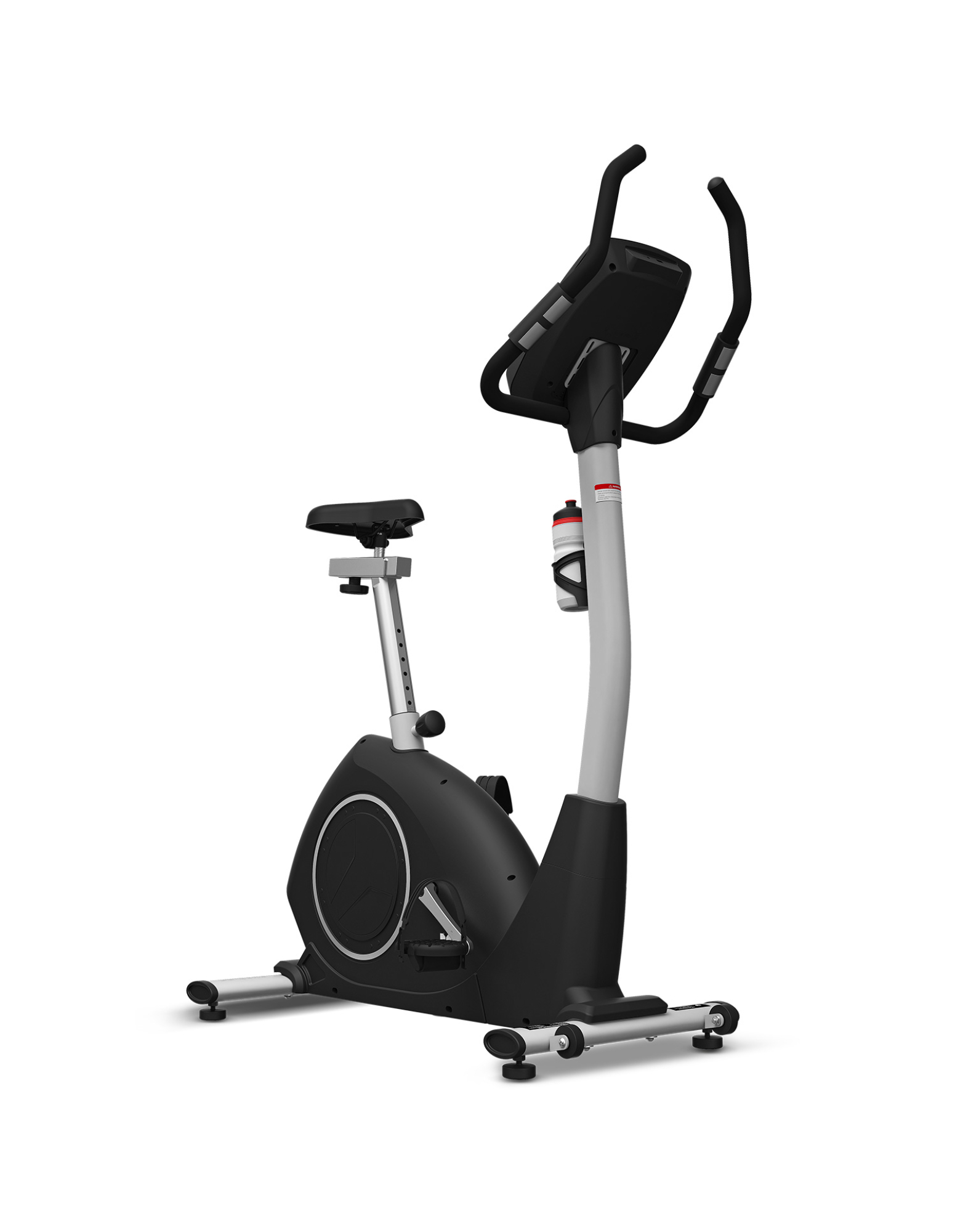
Upright vs recumbent vs spin bike comes down to one real question most buying guides skip: what position can you actually sit in for 30+ minutes, and how hard do you want that session to be? All three use the same basic principle — pedalling against resistance — but the seat position changes which muscles work, how your back and joints feel afterward, and how intense the workout actually is.
Upright Exercise Bikes
An upright bike puts you in the same position as a standard bicycle — sitting more or less vertically, hands on the handlebars, pedalling below you. It is the most familiar position for most people, which is why it is usually the first exercise bike anyone considers. Because your core has to hold you upright through the whole session, you get a small amount of extra core engagement compared to a recumbent bike, on top of the leg work.
| Model | Price | Tier |
|---|---|---|
| Lifespan Fitness EXER-58 | $299 | Entry |
| Lifespan Fitness EXER-80 | $679 | Mid-range |
| Sole LCB Upright Bike | $2,999 | Premium/commercial-grade |


Upright bikes also tend to take up the smallest footprint of the three types, which is worth factoring in if floor space is tight. Higher-end models like the Sole LCB add Bluetooth app connectivity, heart rate monitoring and more console programs, but the core riding position and muscle engagement stays the same as the entry-level EXER-58 — you are mainly paying for build quality, warranty length and extra features, not a fundamentally different workout.
Recumbent Exercise Bikes
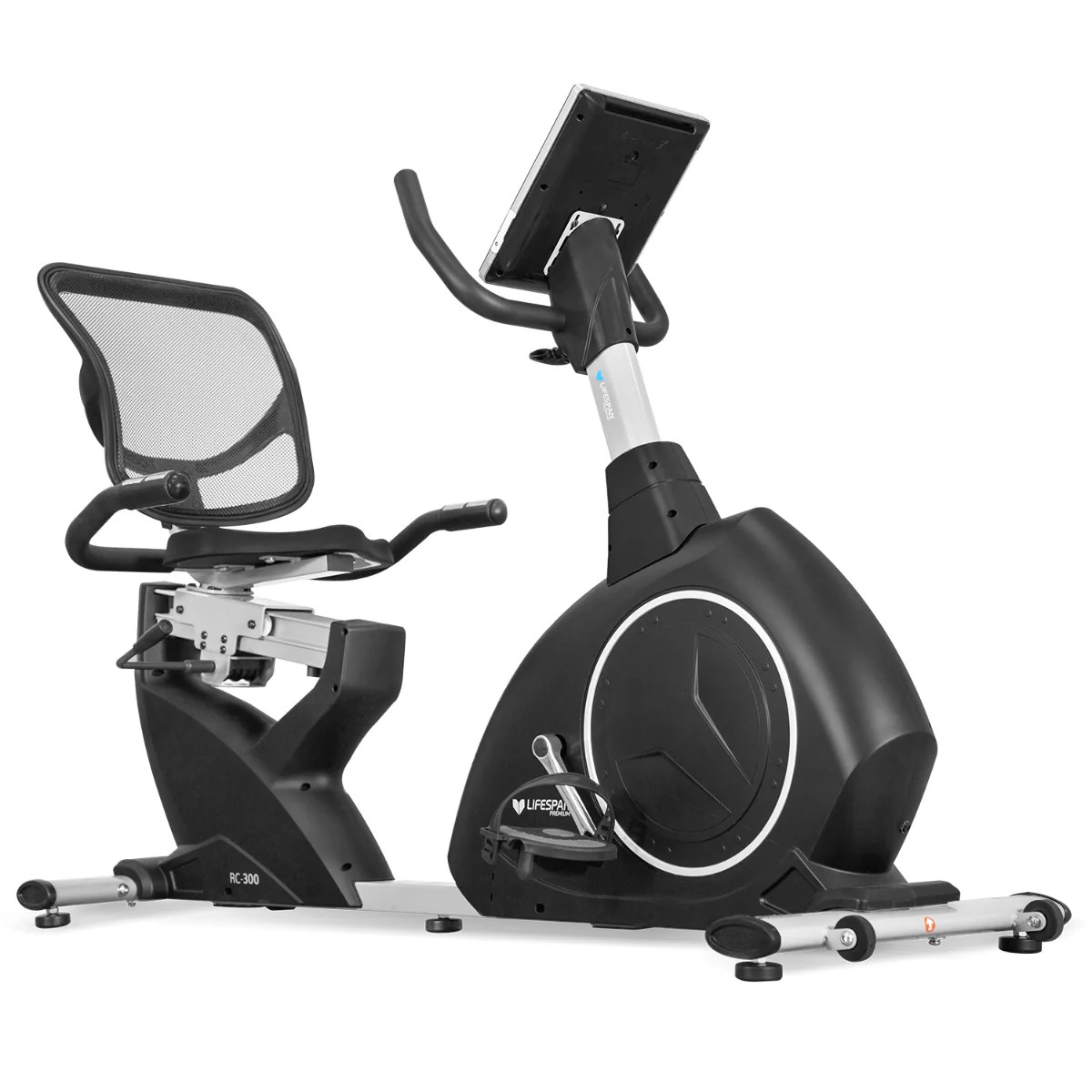
A recumbent bike reclines you into a bucket-style seat with full back support, legs extended out in front rather than below you. This is the most comfortable option by a wide margin for anyone with lower back pain, hip or knee issues, or anyone who simply finds an upright saddle uncomfortable for long sessions. The trade-off is a bigger footprint — the extended frame needs more floor length than an upright or spin bike.
| Model | Price | Tier |
|---|---|---|
| Lifespan RC-81 | $599 | Entry |
| Lifespan RC-300 | $999 | Mid-range |
| Sole R92 | $2,599 | Premium/commercial-grade |


Spin Bikes
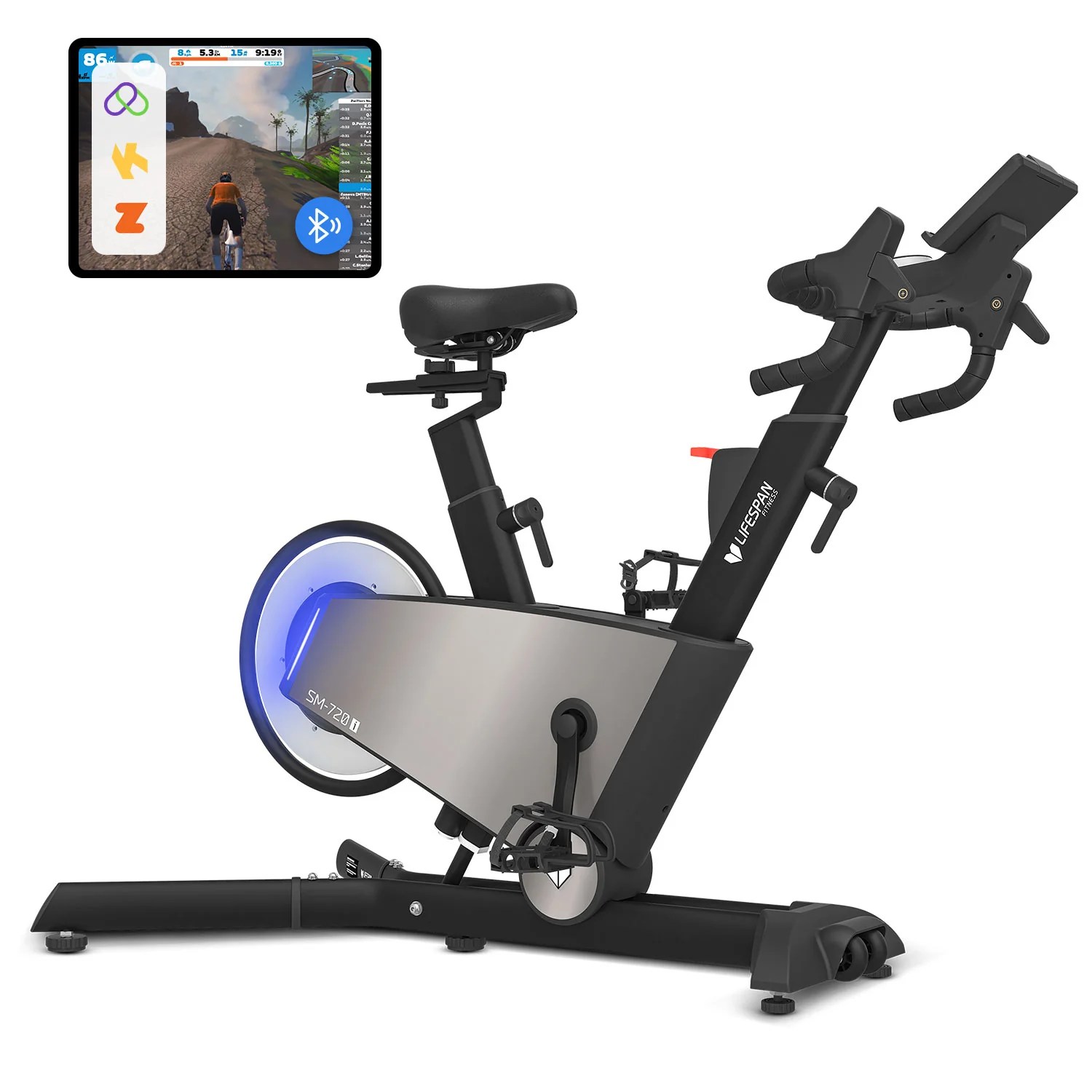
A spin bike copies a road racing bike’s geometry — drop handlebars or close to it, a narrow saddle, and a forward-leaning position that puts real load through your legs and core at higher cadence. Resistance on a spin bike is usually heavier and more direct-feeling than an upright or recumbent bike’s magnetic resistance, which is why spin classes consistently rank as one of the higher calorie-burn cardio options.
| Model | Price | Tier |
|---|---|---|
| Lifespan SM-120 | $495 | Entry |
| Lifespan SM-720i | $1,199 | Mid-range |
| Lifespan SM-900 | $2,199 | Commercial-grade |


Side-by-Side Comparison
Lined up directly, the upright vs recumbent vs spin bike decision usually comes down to the three factors below rather than any single spec.
| Upright | Recumbent | Spin | |
|---|---|---|---|
| Price range | $249-$2,999 | $599-$6,299 | $389-$2,199 |
| Back support | None | Full back rest | None |
| Joint impact | Low | Lowest | Low, but higher intensity load |
| Core engagement | Moderate | Minimal | High |
| Workout intensity ceiling | Moderate | Moderate | Highest |
| Footprint | Compact | Largest | Compact |
Which One Should You Buy?
If you are choosing based on comfort first, a recumbent bike is the clear answer — the back support and relaxed leg position make it realistic to actually use most days, which matters more for long-term results than any spec on a sheet. If you are choosing based on workout intensity and you are already reasonably fit, a spin bike gives you the hardest session in the smallest amount of time, closer to what you would get in a studio class. An upright bike is the sensible default if you are not sure yet which camp you fall into — it is the most common, most versatile option, and the cheapest entry point at $249.
If your main goal is weight loss rather than comfort or intensity specifically, our Exercise Bike vs Treadmill comparison looks at that question directly across equipment types, not just within bikes.
Budget plays a real role too. If you are not yet sure which type suits you, it rarely makes sense to buy at the premium end first — an entry-level upright ($299) or spin bike ($495) is cheap enough to treat as a trial, and if it turns out the wrong fit, reselling a well-kept entry-level bike is far less of a loss than a $2,500+ commercial-grade model you barely used.
Magnetic vs Direct Resistance: Why It Changes the Feel
Most upright and recumbent bikes in this range use magnetic resistance — a magnet moves closer to or further from the flywheel to change how hard it is to pedal, controlled electronically or by a dial. It is quiet, low-maintenance, and gives smooth, consistent resistance steps, which is why it dominates home-friendly bikes across all three types.
Spin bikes more often use direct contact resistance (a felt or leather pad pressing on the flywheel) or a heavier, denser flywheel with magnetic resistance layered on top, which is part of why spin bikes feel more like riding an actual road bike under load — the resistance ramps up more aggressively and responds faster when you turn the dial mid-ride. If near-silent operation matters (apartment living, early morning sessions before anyone else is up), check the specific model’s resistance type before buying rather than assuming by bike category alone.
Matching the Bike to Your Situation
Recovering from injury or managing joint pain: recumbent is the safest starting point. The reclined seat removes load from the lower back, and the open leg position (rather than pedalling directly beneath your hips) is generally easier on sensitive knees and hips. Check with your physio before starting any new equipment if you are recovering from a specific injury.
Training for cycling or triathlon: a spin bike is the closest simulation to road riding geometry and effort, and several models support apps like Zwift or Kinomap for structured training sessions rather than just steady-state cardio.
Sharing the bike with a partner or family member of a different fitness level: an upright bike’s broad seat and handlebar adjustment range tends to suit the widest range of body types and fitness levels without needing to reset much between users, compared to a spin bike’s narrower, more performance-focused saddle.
Watching TV or working while you ride: a recumbent bike’s backrest makes low-intensity, long-duration sessions far more comfortable to sustain than leaning on an upright or spin bike’s handlebars for 45+ minutes.
Maintenance: What to Expect Long-Term
All three types need the same basic care regardless of position: keep the frame and flywheel area free of dust, check pedal and seat bolts periodically for looseness from vibration, and avoid letting sweat sit on metal components after a session. Magnetic resistance bikes (most upright and recumbent models here) need almost no belt or brake pad maintenance. Spin bikes with direct contact resistance pads will eventually need the pad replaced as it wears — a normal, inexpensive part on most models, not a sign of a faulty bike.
Why Buy From Mr Treadmill
All three bike types covered here can be tried in person at our Geebung showroom before you buy — sitting on a bike for two minutes in a showroom tells you more about fit than any spec sheet. We deliver across Brisbane, and if you are not ready to commit to buying, exercise bike hire from $16/week lets you try a type properly before deciding. According to Healthline, regular cycling improves cardiovascular fitness and leg strength with low joint impact regardless of which seated position you use — the right type for you is the one you will actually get on consistently.
Upright vs Recumbent vs Spin Bike FAQ
Which exercise bike is best for lower back pain?
A recumbent bike is the best option for lower back pain — the reclined seat with full back support takes pressure off the lower spine that an upright or spin bike’s saddle does not provide.
Which exercise bike burns the most calories?
Spin bikes typically burn the most calories per session due to the higher-intensity, higher-cadence riding position and heavier resistance options, similar to a studio spin class.
Is an upright or recumbent bike better for beginners?
An upright bike is usually the better starting point — it is the most familiar position, works a broader mix of muscles, and is the cheapest entry price. A recumbent bike suits beginners specifically dealing with back or joint discomfort.
Do spin bikes take up less space than upright bikes?
They are similar — both have a compact footprint compared to a recumbent bike’s longer frame. Exact dimensions vary by model, so check the individual product page before buying.
Can I use a recumbent bike for a high-intensity workout?
Yes, with enough resistance, but it will never match a spin bike’s intensity ceiling — the reclined position and reduced core engagement cap how hard you can realistically push compared to an upright, aggressive riding position.
What is the price difference between the three types?
Spin bikes have the lowest entry price ($389), followed by upright ($249) and recumbent ($599). At the premium end, recumbent bikes go highest ($6,299 for the Spirit CR900) due to larger frames and more features.
Which bike type is best for an office or standing desk setup?
Neither recumbent nor spin bikes suit a desk setup. A compact under-desk option like the Lifespan Cyclestation 3 ($409) is purpose-built for pedalling while you work, separate from the three main types covered here.
Do I need special shoes for a spin bike?
No, most spin bikes we stock use standard pedals with a toe cage or strap, so regular athletic shoes work fine. Clip-in pedals are an optional upgrade on some models, not a requirement.
How noisy is each bike type?
Magnetic resistance bikes (most upright and recumbent models) are near-silent. Spin bikes with direct contact resistance pads produce a faint friction sound under heavy resistance, though it is far quieter than older belt-drive designs.
There is no universally “best” choice in the upright vs recumbent vs spin bike comparison — only the best fit for your body, your space and what you actually want from a cardio session. Start with comfort (can you sit on it for 20+ minutes without wanting to stop), then layer in intensity and budget from there.
Ready to try one in person? Visit our Geebung showroom or call (07) 3865 4940 — we will help you find the right fit.


