
Barbell and Weight Plates: Standard vs Olympic, What Weight to Start With

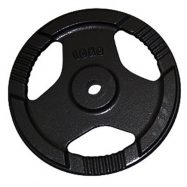
Quick Answer: The right barbell and weight plates need to match sleeve sizes — standard barbells have a 25mm sleeve and Olympic bars have a 50mm sleeve, so the two aren’t interchangeable. We stock Standard barbells in 180cm ($55) and 213cm ($55), plus weight plates available in both Standard and Olympic sizing. Most beginners start with the bar alone (15-20kg) and add plates gradually — don’t load up on day one.

On This Page
- Why Build a Barbell Setup at Home
- Standard vs Olympic: What’s the Difference
- Our Barbell and Weight Plates Options
- Choosing Your Weight Plates
- What Weight Should You Start With
- What You Can Actually Train With a Bar and Plates
- Common Mistakes When Starting Out
- An Alternative: Weighted Bags
- Comparison Table
- Frequently Asked Questions
Why Build a Barbell Setup at Home
A barbell and a set of plates is still the most cost-effective way to add real, progressive strength training to a home gym. Unlike fixed dumbbells, where adding weight means buying a whole new pair, a barbell setup scales with you — you add a few more kilos of plate as you get stronger instead of replacing equipment. It’s also compact relative to what it offers: a bar and a stack of plates take up far less room than an equivalent rack of dumbbells covering the same weight range.
Standard vs Olympic: What’s the Difference
The difference comes down to the sleeve — the part of the bar the plates slide onto. Standard bars have a 25mm sleeve, Olympic bars have a 50mm sleeve. Plates are drilled to match one or the other, so a Standard bar needs Standard plates and an Olympic bar needs Olympic plates — they don’t cross over. If you already own a bench, rack or plates from a previous setup, check which size you have before buying more. Olympic bars and plates are what you’ll typically find in commercial gyms, while Standard-sized equipment is common in home setups built on a budget.
Our Barbell and Weight Plates Options
We currently stock Standard barbells in two lengths: the 180cm Barbell ($55) and the Standard 213cm Barbell ($55), same price, different reach — the 213cm suits a wider rack or more plates per side, while the 180cm is easier to manage in a tighter garage or spare room. Neither bar is drilled for Olympic-sized plates, so if you’re planning to use plates from an existing Olympic set, these aren’t the right match.
Choosing Your Weight Plates
Our Black Weight Plates (Standard and Olympic, all sizes, new and used) listing covers both sleeve sizes, so make sure you select the size that matches your bar. Buying used plates is a legitimate way to cut cost if you’re not fussed about cosmetic wear — the iron doesn’t care whether a plate has a few scuffs on it. Mixing plate sizes (a couple of large ones plus smaller fine-tuning plates) also makes it easier to make small jumps in weight as you progress, rather than being stuck adding large increments at a time.

What Weight Should You Start With
A Standard or Olympic bar alone weighs around 15-20kg depending on the model. Most beginners are better off training with just the bar for the first few sessions to lock in form on squats, presses and deadlifts, then adding small plates in 2.5-5kg increments per side. Loading the bar heavy on day one is the most common way new lifters hurt their lower back — the bar itself is a legitimate training load when your technique is still developing.
What You Can Actually Train With a Bar and Plates
A barbell covers the core compound lifts that most strength programs are built around: squats, deadlifts, bench press (if you have a bench), bent-over rows and overhead press. These movements train multiple muscle groups at once and are generally considered more time-efficient than isolating muscles one at a time with dumbbells. If you’re planning to add squats or bench press specifically, pairing your bar with a rack makes the movement safer to perform alone — our Power Rack vs Smith Machine guide covers what to look for there.
Common Mistakes When Starting Out
The two mistakes we see most often are loading too much weight before technique is solid, and buying plates that don’t match the bar’s sleeve size. Both are easy to avoid — start light, add weight gradually, and double-check Standard vs Olympic before you buy a second item to pair with what you already own.
Training Alone: Basic Safety Habits
If you’re lifting without a spotter, the simplest safety habit is choosing exercises where failure isn’t dangerous without help. Squats and deadlifts with moderate, controlled weight are generally safe to fail at — you can step back from a squat or simply put a deadlift down. Bench press without a rack or spotter is where most of the real risk sits, so if you’re planning to bench alone regularly, pair your bar with a proper rack rather than lifting off the floor or an unstable surface.
Why a Barbell Beats Fixed Dumbbells for Long-Term Progression
Fixed-weight dumbbells are simple to use but expensive to scale — doubling your pressing strength over a year or two usually means buying several new pairs along the way. A barbell and a growing stack of plates sidestep that problem entirely: the same bar takes you from your first session to years of training later, with small plates letting you add weight in increments as fine as 1-2.5kg per side once you’re training seriously.
Getting Your Form Right Before You Add Weight
The three lifts most new barbell owners start with — squat, deadlift and overhead press — all reward getting the pattern right before loading up. For the squat, that usually means working on sitting your hips back and keeping your chest up through the full range before worrying about depth or speed. For the deadlift, the priority is keeping the bar close to your legs throughout the lift rather than letting it drift forward, which is what tends to stress the lower back. For the overhead press, bracing your core and avoiding an excessive back arch keeps the movement safe as the weight goes up. None of this requires a coach to get reasonably right — plenty of free, reputable video guides cover each lift in detail, and spending a session or two on technique with an empty or lightly loaded bar is time well spent before adding real weight.
Storing Your Bar and Plates When Not in Use
A bar on its own can simply lean in a corner or sit across two sturdy hooks on a wall. Plates are better stored on something that keeps them off the floor and sorted by weight — even a basic A-frame plate tree or the weight storage pegs built into some racks and benches makes loading up for your next session faster, since you’re not hunting through a pile to find the right pair of plates.
Small Accessories Worth Adding
A pair of spring or spin-lock collars keeps plates from sliding during a lift, which matters more than it sounds once you’re moving any real weight — an unbalanced bar is a genuine hazard, not just an annoyance. Lifting straps can help once grip starts failing before the target muscle does, particularly on deadlifts, though they’re not something a true beginner needs on day one. Weightlifting belts are another common add-on, though most coaches recommend holding off until you’re lifting loads that genuinely challenge your core bracing rather than wearing one from the very first session.
Tracking Progress Without Overcomplicating It
You don’t need an app or a spreadsheet to progress on a barbell — a notebook with the date, the lift, the weight and the reps is enough to see whether you’re actually improving over weeks and months. The simplest sign you’re ready to add weight is completing all your planned sets and reps with a couple left in reserve; the simplest sign you’ve added too much is your form breaking down before you hit your target reps.
An Alternative: Weighted Bags
If you don’t want to deal with a bar and plates at all, the Azuni Weighted Bags (30kg) ($65) are a simpler option for functional strength work — squats, carries, cleans — without needing a rack to store plates on. They’re a reasonable starting point if you’re not yet sure whether barbell training is something you’ll stick with long-term.

Comparison Table
| Product | Price | Best For |
|---|---|---|
| Barbell 180cm | $55 | Tighter spaces, standard racks |
| Barbell (Standard) 213cm | $55 | Wider racks, more plates per side |
| Black Weight Plates (Std/Olympic) | Varies by set | Matching your existing bar size |
| Azuni Weighted Bag (30kg) | $65 | No-rack functional training |
A Simple Way to Start Using Just a Bar and Plates
You don’t need a full program to get value from a barbell early on. A straightforward way to start is three sessions a week, alternating a lower-body-focused day (squats, then deadlifts) with an upper-body day (overhead press, then bent-over rows). Keep every set at a weight you could comfortably do two or three more reps of — the goal in the first few weeks is grooving the movement pattern, not testing your limits.
New vs Used Plates: What Actually Matters
The main things to check on used plates are that the hole size is accurate (a plate that’s slightly out of round can wobble on the bar) and that there’s no visible cracking, particularly on cast iron plates. Surface rust and chipped paint are cosmetic and don’t affect how the plate performs — that’s where the real savings are on a used set compared to new.
According to Healthline, regular strength training with free weights builds muscle, improves bone density and supports long-term metabolic health — the same benefits you get from a loaded barbell at home as in a commercial gym.
Frequently Asked Questions
Can I use Olympic plates on a Standard bar?
No — the sleeve diameter doesn’t match (25mm vs 50mm). You’d need an adapter sleeve, which isn’t something we’d recommend for heavy loads.
How much weight should a beginner start with?
Just the bar (15-20kg) for your first few sessions, then add 2.5-5kg per side as your form holds up.
Are the weight plates new or used?
Both — the listing covers new and used stock in Standard and Olympic sizing.
Do I need a rack to use a barbell?
Not strictly, but it makes loading/unloading and safety much easier, especially for squats and bench press. See our Power Rack vs Smith Machine guide if you’re deciding on one.
What’s the difference between the two barbell lengths?
Just reach — 213cm gives you more room for plates and suits a wider rack; 180cm is easier to manoeuvre in a small space.
What exercises should I start with?
Squats, deadlifts and overhead press are the usual starting points — they build a strength base without needing a bench. Add bench press once you have somewhere stable to lie on.
Do you sell collars or clips to hold the plates on?
Ask our team when you order — clips and collars are a small add-on worth getting at the same time as your bar.
Can I train barbell lifts safely without any spotter at all?
Squats and deadlifts generally can be, at sensible weights, since you can bail out of both without assistance. Bench pressing alone is the riskiest of the three — use a rack with safety bars if you plan to bench without a spotter.


